ICD 10 Code for Kidney Stones Explained
The icd 10 code for kidney stones is found in the N00–N99 chapter. Urinary calculi are categorized under N20–N23. In the U.S. 2026 ICD-10-CM, N20.0 is the specific code for “Calculus of kidney.” It becomes effective on October 1, 2025. This code is critical as it connects a kidney stone diagnosis to claims, DRG grouping, and reimbursement.
Kidney stone icd 10 codes vary based on the stone’s location. Coders must accurately determine where the stone is — kidney, ureter, bladder, or lower tract. This choice affects the selection of codes, such as N20.0 for renal stones or N20.1 for ureteral stones. When the location is unclear, N20.9 is used. The correct code is essential for proving medical necessity for treatments like ureteroscopy or shockwave lithotripsy.
Kidney stones can vary greatly in size and cause significant discomfort. They may lead to blood in the urine, infection, or blockages. The diagnosis often involves urinalysis, CT or ultrasound scans, and stone analysis. Proper documentation is key to avoid billing issues. It ensures that the chosen kidney stone diagnosis code is accurate and justifiable.
Overview Of Kidney Stones And Diagnostic Terminology
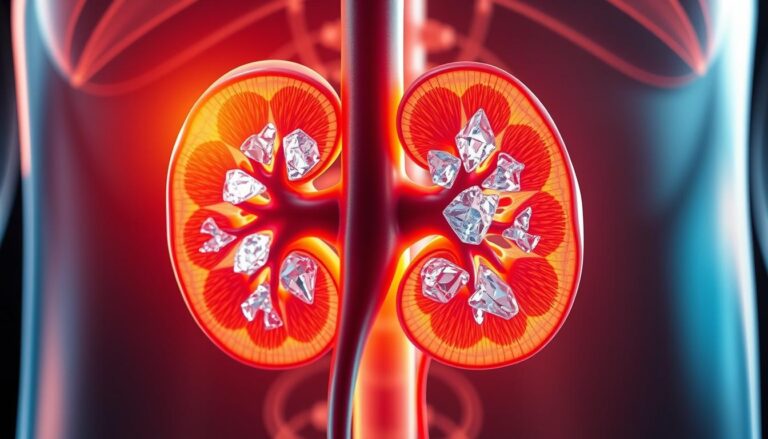
Kidney stones form when minerals and salts crystallize in the renal pelvis or calyces. Most contain calcium oxalate, but uric acid, struvite, and cystine stones occur. Many remain silent until they shift or block urine flow.
Risk factors include dehydration, high dietary salt and animal protein, metabolic disorders such as hyperparathyroidism, Crohn’s disease, and recurrent urinary tract infections. Acute presentations often require labs and imaging; non-contrast CT is the usual test for suspected stones.
What Kidney Stones Are And Common Causes
Stones begin as tiny crystals that grow when urine becomes supersaturated with minerals. Diet and metabolism shape composition: calcium oxalate predominates in the general population. Uric acid stones link to high purine intake and low urine pH.
Infections can produce struvite stones, while genetic issues like cystinuria cause cystine stones. Identifying the type guides prevention and helps medical coders pick the proper diagnosis code.
Clinical Symptoms That Prompt Coding And Diagnosis
Severe flank or back pain is the most common symptom. Visible blood in the urine, nausea and vomiting, fever or chills when infection is present, and dysuria often bring patients to the emergency department.
When obstruction or infection appears, documentation must note those findings. Such details change code selection and affect whether to use a primary renal stone code or an alternative like a hydronephrosis code paired with calculous obstruction.
Common Medical Terms: Nephrolithiasis, Renal Calculi, Calculus
Clinicians may use terms interchangeably. Nephrolithiasis refers to stones in the kidney, renal calculi highlights the organ focus, and calculus is a general term for a stone.
Accurate wording in the record makes a difference for coding. Coders match phrases to the right entries, such as the icd 10 code for nephrolithiasis when the kidney is specified. For situations involving ureter or bladder, related terms guide selection of nephrolithiasis icd 10 or renal calculi icd 10 variants.
Understanding The ICD-10-CM Code Structure For Urinary Calculi
ICD-10-CM categorizes genitourinary disorders in the N00–N99 chapter. Urinary calculi occupy a specific range within this block. This requires coders and clinicians to be precise in linking clinical notes to diagnoses.
How Codes Are Organized In The N00–N99 Range
The N00–N99 range groups kidney, ureter, bladder, and other urinary conditions by organ system. Codes start with acute glomerulonephritis and move to obstructive disorders. The N20–N23 cluster is dedicated to urinary stones.
This system makes it easier to find related codes for claims and audits. It supports chapter notes, Excludes rules, and Code Also guidance, all of which affect sequencing.
Where N20 And N21 Families Fit And Why Location Matters
N20 covers kidney and ureter stones. N21 addresses bladder and urethral stones. N22 deals with stones occurring in the course of other diseases, requiring coders to first code the underlying condition.
Choosing between N20 and N21 depends on the stone’s location. A note specifying the kidney allows for a specific icd 10 code like N20.0. Without specifying the location, claims may face payer scrutiny.
Billable Versus Unspecified Codes And Effective Dates
Billable codes offer the specificity payers expect. For example, N20.0 is a billable code for kidney calculus, effective from October 1, 2025, to 2026. This continuity is critical for long-term reporting and datasets.
Unspecified codes, like N20.9 or N21.9, serve as placeholders when site details are missing. Their frequent use can lead to payer queries or denials, highlighting the importance of detailed clinical notes.
| Code Range | Typical Use | Example Codes |
|---|---|---|
| N00–N99 | Entire genitourinary chapter; organizes related conditions and sequencing rules | N00–N99 |
| N20–N23 | Urinary calculi cluster; offers site-specific and unspecified options | N20.0 (kidney), N20.1 (ureter), N21.0 (bladder) |
| N20 | Kidney and ureter stones; used when documentation names those sites | N20.0, N20.1, N20.2, N20.9 |
| N21 | Lower urinary tract calculi; applied for bladder or urethral stones | N21.0, N21.1, N21.8, N21.9 |
| N22 | Calculi occurring secondary to other diseases; code underlying condition first | N22.x (use with primary disease code) |
When a chart mentions renal calculus, coders must map terms like nephrolithiasis and renal calculi icd 10 to the correct N20 or N21 code. Clear documentation is key to avoiding denials and ensuring timely reimbursement.
ICD 10 Code For Kidney Stones
When a stone is found in the kidney, coders use the primary diagnosis that matches the location. Accurate clinical notes about imaging, symptoms, and location are key. They differentiate between a generic entry and a specific code that supports reimbursement and reporting.
Primary Code N20.0: Calculus Of Kidney
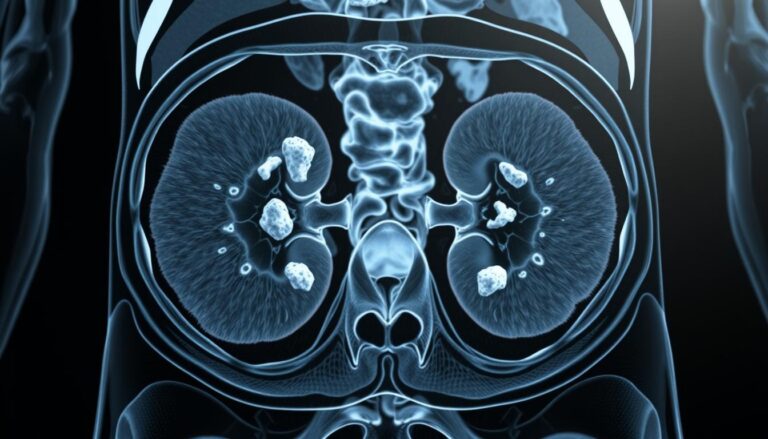
N20.0 is defined as “Calculus of kidney.” This code is used when a kidney stone is confirmed by CT, ultrasound, or surgery. Entries that map to N20.0 include nephrolithiasis NOS, renal calculus, and staghorn calculus.
When N20.0 Is Billable/Specific For Reimbursement
Bill N20.0 only when the stone is confirmed to be in the kidney. Clear imaging reports or operative notes stating “renal calculus” or “stone in kidney” support reimbursement. Avoid using N20.0 for stones in the ureter, bladder, or lower urinary tract.
If hydronephrosis with calculous obstruction is documented, code the obstruction (for example, N13.2) instead of pairing it with N20.0 in the same encounter.
Common Synonyms Assigned To N20.0: Nephrolithiasis NOS, Renal Calculus, Staghorn Calculus
Clinical context is essential for choosing the right code. Notes about flank pain, hematuria, fever, or obstruction, along with imaging confirmation, point toward N20.0. Details like stone size, composition, and laterality are valuable for both clinical and billing purposes.
For claims and clinical queries, ensure documentation ties symptoms and diagnostic tests to the diagnosis. This clarity ensures the icd 10 code for kidney stone diagnosis and the icd 10 code for renal calculi are applied correctly. It reduces denials and improves coding accuracy.
Coding For Stones By Location: Kidney, Ureter, Bladder, Lower Urinary Tract
Accurate coding begins with pinpointing the stone’s location. This detail influences both clinical decisions and procedure choices. Precise documentation allows for the selection of the appropriate icd 10 code for kidney stones and related treatments.
N20.1 Calculus Of Ureter And N20.2 Combined Kidney And Ureter Codes
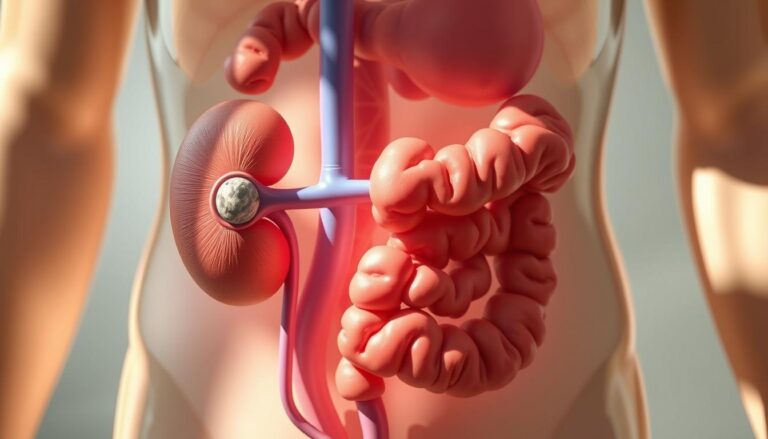
N20.1 is used when the stone is located in the ureter. Ureteroscopy is a common procedure for these cases. For stones in both the kidney and ureter, N20.2 is applied. This code helps in documenting the complexity of the case and ensures proper pairing with procedures.
N20.9 Urinary Calculus Unspecified And When To Use It
N20.9 is reserved for cases where the exact location is not documented. Payers prefer specific locations to avoid denials or payment issues. It’s essential to verify the location before defaulting to N20.9 for icd 10 code for kidney stones claims.
N21 Series For Lower Tract Stones: Bladder And Urethra Codes (N21.0, N21.1, N21.8, N21.9)
The N21 series addresses lower tract stones. N21.0 is for bladder stones, often treated with cystolitholapaxy. N21.1 is for urethral stones, aligning with specific procedures. N21.8 and N21.9 are for other or unspecified lower urinary tract sites. Accurate use of these codes ensures the correct care pathway for nephrolithiasis icd 10.
When choosing between nephrolithiasis icd 10 codes, look for laterality, obstruction, and any infections. Detailed location information is key to selecting the right icd 10 code for kidney stones. This reduces the need for clarification with clinicians and payers.
When To Code Hydronephrosis And Obstructive Complications Instead Of A Stone Code
Obstruction can change how we code. If hydronephrosis is documented and linked to a stone, we usually report the hydronephrosis code. This approach reflects the clinical issue driving care and ensures accurate reimbursement.
Understanding N13.2: Hydronephrosis With Renal And Ureteral Calculous Obstruction
N13.2 captures hydronephrosis due to calculous obstruction in the kidney or ureter. It’s used when dilation of the collecting system is documented with an obstructing stone. This code is appropriate when imaging and notes show obstruction, symptoms from impaired drainage, or when urgent intervention is prompted.
Excludes Notes And Why You Should Not Report N20.0 With N13.2 In The Same Encounter
The N20 family includes an Excludes2 entry for N13.2. This means N20.0, N20.1, or other stone codes and N13.2 are mutually exclusive for the same condition. If hydronephrosis from a stone is documented, report N13.2 only. If the stone is present without hydronephrosis, code the specific stone based on location.
Coding Strategy For Stones Causing Hydronephrosis Or Secondary Conditions
Decide the principal code based on the reason for treatment. If a patient presents for decompression of an obstructed system, sequence N13.2 first. If a stone without obstruction is the focus, choose the correct stone code. When secondary conditions appear, code to reflect clinical priority: infection or renal impairment may come before a stone code on the claim.
Document obstruction, degree of hydronephrosis, and whether the stone was removed or remains in place. Clear notes are key to accurately selecting an icd 10 code for kidney stones or icd 10 code for renal calculi in claims.
Related And Adjacent ICD-10 Codes To Consider In Claims
Claims for urinary stones often include nearby diagnoses that change care and payment. Coders should spot chronic kidney disease, infections, abscesses, and systemic conditions that either cause stones or result from them. Accurate sequencing can affect DRG grouping and clinical clarity when the icd 10 code for kidney stones appears on the claim.
Chronic Kidney Disease Codes (N18.x) And Coding Chronic Conditions With Stones
When a patient has long-standing renal impairment, add the appropriate N18.x code for CKD stage. For example, N18.3 through N18.5 cover stages 3 to 5, while N18.6 indicates ESRD. List the CKD code when it affects management of a stone, then report the icd 10 code for nephrolithiasis as secondary when both apply.
Infection And Abscess Codes That Reference Calculi
Infectious complications commonly accompany stones. Renal and perinephric abscess uses N15.1 and may be documented “with calculus N20.0.” Include UTI or sepsis codes when present, and sequence them per guidelines to reflect the acute issue driving services.
Other Relevant Codes: N22 And When To Code Underlying Disease First
N22 covers calculi in diseases classified elsewhere. Follow Code Also/Code First instructions closely. If gout or metabolic disease is the root cause, list the underlying disease first, then report N22. This approach aligns sequencing with etiology and payer expectations.
Below is a quick reference to help match common scenarios to codes and sequencing rules. Use this when building claims that include renal calculi icd 10 alongside comorbid conditions.
| Clinical Scenario | Primary Code | Secondary/Related Codes | Sequencing Tip |
|---|---|---|---|
| Kidney stone with stage 4 CKD | icd 10 code for kidney stones (N20.0) | N18.4 | Report N18.4 first if CKD drives care; or sequence per payer rules |
| Calculus with renal abscess | N15.1 | icd 10 code for nephrolithiasis (N20.0) | List N15.1 as principal when abscess is primary reason for admission |
| Uric acid stone linked to gout | M10.9 (gout, unspecified) | N22 (calculi in diseases elsewhere) | Code underlying gout first per Code First note, then N22 |
| Stone with urinary tract infection | icd 10 code for kidney stones (N20.0) | N39.0 (UTI), or sepsis code if systemic | Include infection codes to reflect added complexity and treatment need |
Clinical Documentation Tips To Ensure Accurate Kidney Stone ICD-10 Coding
Clear and concise notes are key to efficient coding and fewer denials. Accurate descriptions of the stone’s location, any blockage, infection, and history of chronic conditions are essential. This ensures the correct ICD-10 code is assigned for kidney stones.
Pinpointing Stone Location In The Clinical Note To Select The Correct N20/N21 Code
Begin by noting the exact location of the stone: kidney, ureter, bladder, or urethra. This detail is critical in deciding between N20 and N21 codes. For instance, “renal calculus” should be linked to N20.0 if the kidney is involved.
If imaging reveals stones in both the kidney and ureter, document each location. Use combined terms that support a single code. Mention laterality, such as left or right, as it’s important for both clinical clarity and payer requirements.
Using Physician Terminology Alignment: Nephrolithiasis, Renal Stone, Ureteric Stone
Ensure that clinician language aligns with ICD-10 descriptors. Nephrolithiasis typically corresponds to the ICD-10 code for kidney stones. If the note mentions “ureteric stone,” use the N20.1 code for the ureter, not a generic kidney code.
Include details like staghorn, obstructing, or non-obstructing. These descriptors can influence whether a coder uses N20.0 or looks for codes related to obstruction and hydronephrosis.
When To Query Clinicians For Missing Details (Location, Obstruction, Infection, Laterality If Documented)
Query clinicians when the note lacks essential details like location, obstruction status, or infection. A brief clarification can prevent the use of unspecified codes like N20.9. Ask for the specific location, any hydronephrosis, UTI or abscess presence, and prior stone history.
Document the stone’s composition, recurrence, or preventive measures when relevant. Such details support chronic-care codes and justify preventive counseling or medication like thiazides or allopurinol.
| Documentation Element | Why It Matters | Example Phrasing |
|---|---|---|
| Anatomic Location | Determines N20 vs N21 family and specific code selection | “Left renal calculus with concurrent right ureteral stone” |
| Obstruction / Hydronephrosis | May require N13.2 or exclude reporting N20.0 together | “Right hydronephrosis secondary to obstructing ureteric calculus” |
| Infection or Abscess | Impacts coding for sepsis or renal abscess alongside calculus | “Ureteral stone with associated pyelonephritis” |
| Laterality | Improves specificity and supports clinical decisions | “Left-sided nephrolithiasis” |
| Stone History & Composition | Supports preventive care codes and chronic management | “Recurrent calcium oxalate stones; counseling on hydration and diet” |
| Procedure Linkage | Justifies CPT pairing and medical necessity for treatment | “URSL performed for obstructing ureteric stone; diagnosis: ureteral calculus” |
Implications For Billing, Reimbursement, And DRG Grouping
Accurate diagnosis coding is key for reimbursement and claim acceptance in urinary stone care. The icd 10 code for kidney stones must align with clinical notes to prove medical necessity for procedures like ureteroscopy or lithotripsy.
The way a record documents the kidney stone diagnosis code impacts MS-DRG assignment. N20.0 often falls into MS-DRGs like 693 for urinary stones with MCC or 694 for those without MCC. This grouping influences facility payment and length-of-stay expectations.
Documentation should detail the stone’s location, any obstruction, infection, and laterality when known. Payers expect the icd 10 code for renal calculi to reflect these specifics. Using N20.9 or N21.9 without a clinician query can lead to denials or requests for clarification.
Common billing errors include sequencing mistakes and disallowed combinations. For instance, reporting N20.0 with N13.2 in the same encounter is inappropriate. Omitting an underlying condition like N22 when applicable can reduce reimbursement or trigger audits.
Linking the kidney stone diagnosis code to the billed procedure enhances medical necessity. Notes that mention obstruction, persistent symptoms, or failed conservative therapy support claims for procedures. This limits payer challenges.
Claims teams should follow a quick checklist: precise icd 10 code for kidney stones, supporting evidence for obstruction or infection, correct sequencing, and compatible code combinations. This routine helps lower denial rates and improves reimbursement predictability.
Coding For Procedures And CPT Codes Commonly Used With Kidney Stone Treatment
Procedure coding connects a patient’s clinical story to billing. When a patient is diagnosed with a stone, such as N20.0 or N20.1, coders match CPT codes to the intervention. Detailed notes on location, size, and indication are essential. They link the icd 10 code for kidney stones to the appropriate procedure, ensuring medical necessity.
Common interventions include ureteroscopy, extracorporeal shock wave lithotripsy (ESWL), percutaneous nephrolithotomy, and cystolitholapaxy. Each procedure has specific CPT codes that frequently appear on claims when treating renal or ureteral stones.
Representative CPT examples and typical use cases:
- 52332 — insertion of indwelling ureteral stent, often used when obstruction follows a stone.
- 52352, 52353 — cystourethroscopy with ureteroscopy and manipulation or lithotripsy for ureteral stones.
- 50080, 50081 — percutaneous nephrostolithotomy for renal stones, split by stone size.
- 52317, 52318 — bladder stone litholapaxy for stones in the lower tract.
- 52005 — cystourethroscopy with ureteral catheterization as an access or diagnostic step.
- 50561 — renal endoscopy via nephrostomy tract for complex renal procedures.
- 74420 and related imaging codes — intraoperative or diagnostic urography supporting the procedure and diagnosis.
Accurate linking requires the clinical note to state the target site. If the note lists a renal calculus, use the icd 10 code for kidney stone that best matches laterality and specificity. For ureteral therapy, pair the CPT with the icd 10 code for kidney stones or the specific ureteral code to reflect the anatomy treated.
When stones occur with infection or obstruction, sequence matters. Coders must follow “Code First” instructions like those for N22 when another disease drives the calculus. Proper sequencing prevents denials and clarifies why a procedure such as percutaneous nephrolithotomy was necessary.
Small details in the operative report matter. Fragmentation method, stent placement, and whether stone removal was complete justify certain CPT choices. These elements create a clear trail from the kidney stone icd 10 diagnosis to the billed procedure, improving audit readiness and payer acceptance.
Conclusion
Accurate coding begins with clear documentation. When a clinician confirms a kidney calculus, N20.0 is the primary, billable icd 10 code for kidney stones in U.S. practice. This code is effective in the 2026 ICD-10-CM cycle, starting on October 1, 2025. For cases involving location, obstruction, infection, or underlying disease, coders should use the N20 or N21 family codes. N13.2 is used when hydronephrosis with calculous obstruction is present.
It’s essential to pair the kidney stone diagnosis code with the correct procedure codes for medical necessity and reimbursement. Details such as laterality, stone location, and the choice of conservative care or interventions like ureteroscopy or lithotripsy are critical. These factors influence coding and DRG grouping. Adjacent codes, like N18.x for chronic kidney disease, N15.1 for calculi with related renal conditions, and N22 for stones with other diseases, can alter sequencing and payment.
To minimize denials and avoid unspecified codes, it’s important to query clinicians for missing information. This includes the exact anatomic site, obstruction, infection status, and relevant history. Thoughtful documentation that includes conservative measures, imaging findings, and planned procedures supports both clinical care and correct coding. Clear records lead to cleaner claims and more traceable patient care.
FAQ
What is the ICD-10 code for kidney stones?
The primary, billable ICD-10-CM code for a kidney stone is N20.0 — “Calculus of kidney.” It’s the code used when clinical documentation clearly identifies a stone located in the kidney (synonyms include nephrolithiasis NOS, renal calculus, renal stone, staghorn calculus).
How Does N20.0 Fit Into The ICD-10 Structure For Urinary Calculi?
ICD-10-CM places urinary calculi in the N20–N23 subgroup within the N00–N99 genitourinary chapter. N20 covers calculi of the kidney and ureter, N21 covers lower urinary tract calculi, and N22 addresses calculi associated with other diseases. N20.0 specifies a stone in the kidney.
When Is N20.0 Considered Billable Or Specific For Reimbursement?
N20.0 is billable when documentation clearly shows a kidney stone as the diagnosis and the location is specified. The 2026 ICD-10-CM continues to list N20.0 as a billable code effective October 1, 2025. Use it when the clinician documents “stone in kidney,” “renal calculus,” “nephrolithiasis,” or equivalent.
What Codes Should Be Used For Stones In Other Locations?
For ureteral stones, use N20.1. If both kidney and ureter are involved, use N20.2. Lower urinary tract stones have N21 codes (N21.0 bladder, N21.1 urethra, N21.8 other, N21.9 unspecified). N20.9 is urinary calculus, unspecified, and should be a last resort if location is not documented.
When Should N13.2 (Hydronephrosis With Calculous Obstruction) Be Used Instead Of N20.0?
Use N13.2 when hydronephrosis due to calculous obstruction is the documented clinical problem and the clinician’s focus is obstruction/hydronephrosis. ICD-10-CM notes an Excludes2 relationship between N20 codes and N13.2; they should not be reported for the same condition in the same encounter. Choose the code that best reflects the principal reason for treatment.
What Are Common Coding Pitfalls That Can Trigger Payer Denials?
Frequent issues include using unspecified codes (N20.9/N21.9) without querying the clinician, reporting disallowed combinations (e.g., N20.0 with N13.2 for the same problem), failing to sequence underlying disease when required (N22), and not linking the diagnosis to the billed procedure. Clear documentation of location, obstruction, infection, and indication reduces denials.
Which Adjacent Codes Should Coders Consider When Stones Coexist With Other Conditions?
Consider N18.x for chronic kidney disease, N15.1 for renal and perinephric abscess (which can be annotated “with calculus N20.0”), and N22 when calculi are due to diseases classified elsewhere — sequence the underlying disease first when instructed. Also include infection or sepsis codes if present.
What Documentation Details Best Support Accurate Kidney Stone Coding?
Document the exact anatomic location (kidney, ureter, bladder, urethra), presence or absence of obstruction or hydronephrosis, infection status, laterality if known, and any underlying disease. Procedure notes should link the diagnosis to the operation (e.g., ureteroscopy, ESWL, PCNL) and state indications like pain, obstruction, infection, or failure to pass.
How Do Kidney Stone Diagnoses Affect DRG Grouping And Reimbursement?
N20.0 and related codes map to MS-DRGs such as 693 (Urinary stones with MCC) and 694 (Urinary stones without MCC). Accurate principal and secondary diagnoses (e.g., obstruction, CKD, infection) influence DRG assignment, facility reimbursement, and severity adjustments. Precise coding and sequencing are essential.
Which CPT Procedures Commonly Pair With Kidney Stone Diagnosis Codes?
Common CPT procedures include ureteroscopy (e.g., codes in the 52352/52353 range), extracorporeal shock wave lithotripsy (ESWL), percutaneous nephrolithotomy (50080/50081), cystolitholapaxy (52317/52318), and stent placement (52332). Procedure coding should reflect the anatomic target and link to the ICD-10 diagnosis to justify medical necessity.